Florida’s diverse ecosystems provide a perfect habitat for a variety of centipedes and millipedes. Whether you’re a nature enthusiast, a homeowner curious about the inhabitants of your garden, or a researcher studying arthropods, understanding these fascinating creatures is essential. This guide explores the different types of centipedes and millipedes found in Florida, their roles in the environment, and how to manage them effectively.
Centipedes and millipedes are often mistaken for one another, but they belong to distinct classes within the arthropod phylum. Both play significant roles in the ecosystem, primarily as decomposers and, in the case of centipedes, as predators.
Image Suggestion: Diagram comparing centipede and millipede anatomical features.
Florida hosts a variety of millipede species, each with unique characteristics and behaviors.

The Florida Ivory millipede is notable for its creamy-white coloration, which can sometimes have subtle speckles. These millipedes are typically found in moist environments, such as leaf litter and under logs.
A widely distributed species, the North American millipede is recognized by its robust body and vibrant coloration, often in shades of brown and red.
Distinct for its bright yellow bands, this millipede adds a splash of color to the forest floor. It plays a crucial role in breaking down organic material.
Centipedes in Florida are diverse, ranging from the small House Centipede to the striking Florida Blue Centipede.
The Florida Blue Centipede is easily identifiable by its vivid blue coloration. It is an effective predator, controlling pest populations in both natural and residential areas.
As the name suggests, the Bark Centipede resides under tree bark, where it hunts for prey. Its elongated body allows it to navigate tight spaces with ease.
The House Centipede is commonly encountered in human dwellings. While it may seem alarming, it is beneficial for controlling pests like spiders and insects.
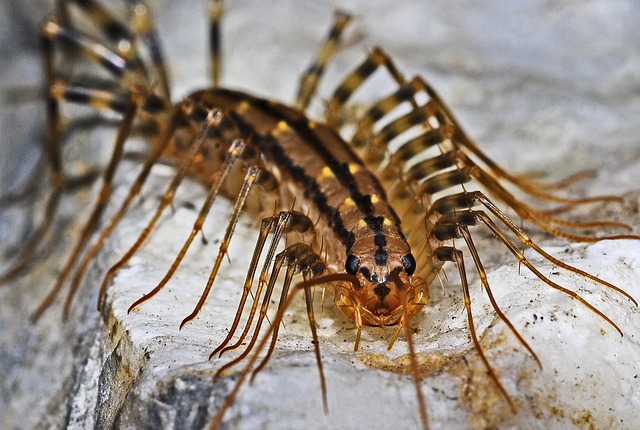
Both centipedes and millipedes are integral to Florida’s ecosystems, each contributing in unique ways.
Centipedes help maintain ecological balance by controlling populations of other arthropods. Their predatory nature ensures that pests like termites and cockroaches are kept in check.
Millipedes play a crucial role in breaking down organic matter, recycling nutrients back into the soil.
While these arthropods are beneficial, their presence in large numbers can sometimes be concerning for homeowners. Effective management ensures a harmonious coexistence.
In cases of severe infestation, chemical treatments may be necessary. Always opt for environmentally friendly options and follow label instructions carefully.
Get in touch with our pest management experts today!
Understanding and appreciating the roles of these arthropods can shift perspectives from seeing them as pests to recognizing their environmental benefits.
Centipedes naturally reduce populations of other pests, decreasing reliance on chemical pesticides that can harm beneficial insects and contaminate water sources.
Millipedes enhance soil fertility by decomposing organic matter, which supports plant health and sustainable agriculture practices.
Both centipedes and millipedes contribute to the rich biodiversity of Florida’s ecosystems, supporting a wide range of other species and maintaining ecological balance.
While centipedes can deliver painful bites, they are generally not dangerous to humans. They prefer to avoid contact and will only bite in self-defense.
Use a vacuum cleaner for immediate removal, seal entry points, and reduce moisture levels. For large infestations, consult a pest control professional.
Millipedes primarily feed on decaying plant material and are not known to cause significant harm to live plants. In some cases, they may nibble on young seedlings, but their impact is generally minimal.
High moisture levels, abundant organic matter, and sheltered areas like piles of leaves or wood provide ideal conditions for these arthropods.
Centipedes and millipedes are remarkable creatures that play vital roles in Florida’s natural environment. By understanding their behaviors, habitats, and ecological contributions, residents can appreciate these arthropods and manage their presence effectively. Embracing coexistence with these beneficial arthropods promotes a healthier and more balanced ecosystem.
For more information or assistance with centipede and millipede issues, don’t hesitate to reach out to our expert team. We’re here to help you navigate the fascinating world of these essential arthropods.